SUBMIT YOUR DETAILS FOR
Imagine driving down a quiet, sun-drenched suburban street where most houses seem to blend into a repetitive blur of traditional gables and beige siding. Suddenly, your eyes are drawn to a silhouette that feels both nostalgic and refreshingly futuristic. It sits low to the ground, stretching across the lot with an effortless grace. Its lines are clean, its materials are raw and honest, and its windows are so large they seem to invite the entire landscape inside. This isn’t just a house; it is the modern ranch, a breathtaking evolution of an American classic that is currently taking the world of residential architecture by storm.
The story of the ranch house—often called the “rambler”—began in the 1930s and reached its peak in the post-war era of the 1950s. It was designed for a generation that craved simplicity, accessibility, and a coection to the outdoors. However, over time, the style became synonymous with cookie-cutter suburban sprawl. Fast forward to today, and a new wave of architects and homeowners are reclaiming this horizontal canvas. By blending the original principles of the ranch with contemporary aesthetics and sustainable technology, they have created a style that is sophisticated, functional, and undeniably cool.
The Defining Characteristics of the Modern Ranch
What exactly makes a ranch “modern”? At its core, modern ranch architecture is defined by its horizontal emphasis. Unlike the vertical aspirations of Colonial or Victorian homes, the ranch embraces the earth. The modern iteration takes this a step further by stripping away the ornamental clutter. You won’t find faux shutters or uecessary decorative trim here. Instead, the beauty lies in the geometry.
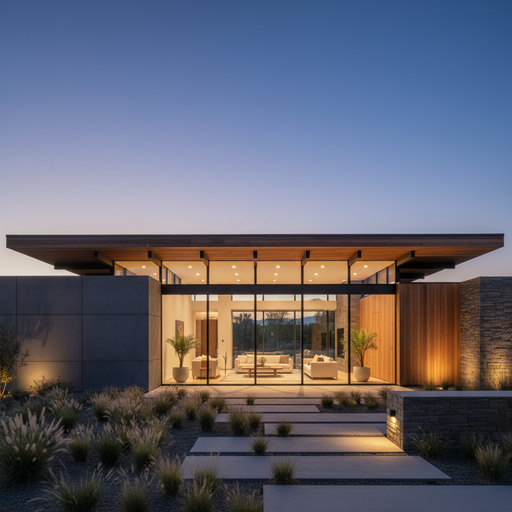
The rooflines are one of the most striking features. While traditional ranches often featured simple hipped roofs, modern versions frequently utilize flat roofs, mono-pitch (shed) roofs, or low-slung gables with deep overhanging eaves. These eaves aren’t just for show; they provide essential shade, protect the exterior walls from the elements, and create a sense of shelter that makes the transition from indoors to outdoors feel seamless.
Asymmetry is another hallmark. A modern ranch might feature a long, low wing balanced by a slightly taller entryway or a protruding garage clad in a contrasting material. This play of volumes creates visual interest without the need for traditional symmetry, allowing the house to feel like a custom piece of art rather than a mass-produced product.
Materials That Tell a Story: The Organic Meets the Industrial
One of the most exciting aspects of modern ranch exterior design is the “material palette.” If the 1950s ranch was about brick and wood siding, the 2024 ranch is about texture, contrast, and authenticity. Architects today are masters at mixing materials to create a look that feels grounded yet iovative.
Natural wood remains a favorite, but it is used iew ways. You might see vertical cedar planks, warm mahogany accents, or even “Shou Sugi Ban”—an ancient Japanese technique of charring wood to make it weather-resistant and give it a stuing, deep black finish. This organic warmth is often paired with industrial elements like black steel beams, smooth concrete panels, or standing-seam metal roofing.
Stone also plays a pivotal role, but the application has changed. Instead of the rounded river rocks of the past, modern designs favor “stacked stone” or large, flat limestone slabs. These stones are often used on a single feature wall or a massive chimney that anchors the house to the site. The goal is to make the house look as though it grew naturally out of the ground, a philosophy often associated with legendary architect Frank Lloyd Wright.
The Power of Glass: Inviting the Outdoors In
If there is one feature that truly defines the modern ranch experience, it is the use of glass. In a traditional home, windows are “punched openings” in the wall. In a modern ranch, the walls themselves often become glass. Floor-to-ceiling windows and massive sliding glass doors are not just luxury additions; they are essential to the design’s DNA.
This transparency serves a poetic purpose. It blurs the line between the living room and the backyard, making the garden part of the interior decor. Imagine waking up in a master suite where the entire back wall is glass, overlooking a tranquil courtyard. The morning light floods the room, and the boundaries of your living space seem to extend to the very edge of your property.
From a functional standpoint, these large glass expanses provide incredible natural light and passive solar heating. Of course, modern engineering ensures that these windows are highly insulated, keeping the home energy-efficient despite the transparency. The use of black or bronze aluminum frames adds a crisp, modern edge that frames the view like a piece of fine art.
A Sophisticated Color Palette: Moving Beyond Beige
Gone are the days when ranch houses were limited to shades of tan or white. The modern ranch dares to be bold. We are seeing a significant trend toward “moody” exteriors—deep charcoals, forest greens, and even matte blacks. These dark tones allow the house to recede into the landscape, making the greenery of the surrounding trees and lawn pop with vibrancy.
However, the key to a successful dark exterior is balance. A charcoal-colored house might be accented with warm oak soffits under the eaves and a bright, natural wood front door. This contrast between “cool” and “warm” creates an inviting atmosphere. For those who prefer a lighter look, the “Modern Farmhouse” influence has introduced crisp whites paired with black metal accents, though the modern ranch stays truer to its low-profile roots than the tall, gabled farmhouse style.
Landscaping as Architectural Extension
In modern ranch design, the landscaping is never an afterthought. Because the house sits so low to the ground, the plants and hardscaping become part of the architecture itself. The goal is to create a “total environment.”
Modern ranch landscaping often leans toward minimalism. Instead of cluttered flower beds, you’ll find structured plantings: ornamental grasses that sway in the breeze, sculptural agaves, or a single, perfectly placed Japanese Maple. Hardscaping is equally important. Large-format concrete pavers, gravel pathways, and low-profile wooden decks extend the living space outward.
Outdoor lighting is the “secret sauce” that brings the modern ranch to life at night. Uplighting on a textured stone wall, recessed lights in the deep eaves, and glowing path lights create a dramatic, resort-like feel. It’s about highlighting the horizontal lines and making the house feel like a glowing sanctuary in the dark.
The Practicality of Single-Story Living
While we often talk about the aesthetics, we caot ignore the sheer practicality that makes the modern ranch so popular today. As homeowners look toward the future, “aging in place” has become a major consideration. A single-story layout eliminates the need for stairs, making every corner of the home accessible for a lifetime.
Furthermore, the sprawling footprint of a ranch allows for a more open and flexible floor plan. Without the need for load-bearing walls to support a second story, architects can create massive, vaulted Great Rooms that combine the kitchen, dining, and living areas into one social hub. This “open concept” living is perfectly suited for the modern lifestyle, where the kitchen is the heart of the home and entertaining is effortless.
Conclusion: A Timeless Legacy Reimagined
The modern ranch is more than just a trend; it is a celebration of a lifestyle that values simplicity, coection, and honest design. By taking the best parts of the 20th-century rambler—the low profile, the open flow, and the indoor-outdoor link—and infusing them with 21st-century materials and bold silhouettes, architects have created a style that feels perfectly suited for our time.
Whether it’s the way the black metal roof catches the afternoon sun, the warmth of the cedar siding against a concrete wall, or the way the giant glass doors slide open to let in the evening breeze, the modern ranch offers a sense of peace that is hard to find in more traditional, vertical homes. It is a reminder that sometimes, the best way to move forward is to take a classic idea and ground it in the beauty of the present. As we continue to look for homes that reflect our desire for both style and serenity, the modern ranch stands tall—or rather, sits low—as a masterpiece of residential architecture.
