SUBMIT YOUR DETAILS FOR
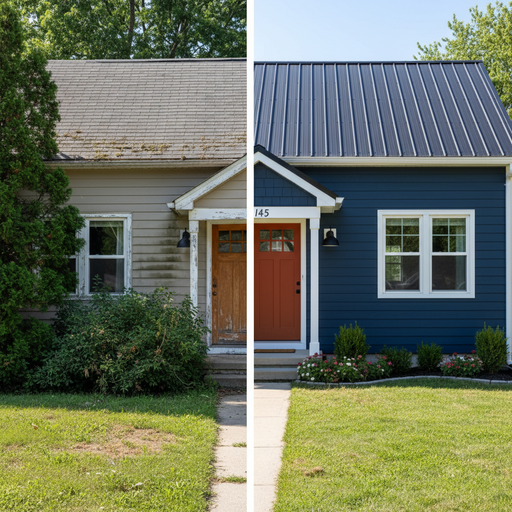
Imagine pulling into your driveway after a long day at work. You look up, and instead of seeing the faded siding, the cracked window seals, or the roof that has seen better days, you see a masterpiece. You see a home that looks brand new, modern, and inviting. This is the dream of every homeowner, yet the journey from “current state” to “dream home” often feels like navigating a financial labyrinth.
Meet Sarah. Sarah lives in a charming suburbaeighborhood, but her house was starting to show its age. She knew she needed an upgrade, but every contractor she called gave her a different number. She found herself asking: Should I invest in fiber cement siding or stick with vinyl? Is a metal roof worth the extra $15,000? Does a new front door really make a difference in property value?
If you find yourself in Sarah’s shoes, you aren’t alone. Exterior remodeling is a significant investment, but it is also one of the most rewarding ways to increase your home’s value and efficiency. In this guide, we will break down the costs, compare the most popular materials, and help you decide where to put your money for the best return on investment (ROI).
The Face of Your Home: Siding Comparison
Siding is the most dramatic change you can make to your home’s exterior. It accounts for the largest surface area and, consequently, a large portion of your budget. Let’s look at the three heavy hitters in the siding world.
Vinyl Siding
Vinyl remains the king of affordability. For a standard 2,000-square-foot home, you can expect to pay anywhere from $6,000 to $12,000. It is low maintenance—usually just requiring a power wash once a year—and comes in virtually every color imaginable. However, it can crack in extreme cold or melt if a rogue grill gets too close. From a storytelling perspective, vinyl is the “reliable sedan” of siding; it gets the job done without breaking the bank.
Fiber Cement (James Hardie)
If vinyl is a sedan, fiber cement is a luxury SUV. It’s incredibly durable, fire-resistant, and can mimic the look of real wood perfectly. The cost, however, jumps significantly, typically ranging from $13,000 to $25,000 for the same size home. Homeowners love it because it doesn’t rot and stands up to harsh weather. While the upfront cost is higher, the ROI is often better because of its longevity and premium appeal.
Natural Wood
For those who want a rustic or high-end traditional look, natural wood (like cedar) is the go-to. Expect to pay $15,000 to $30,000. While beautiful, it requires the most love. You’ll need to stain or paint it every few years to prevent rot and insect damage. It’s a labor of love that adds undeniable character but requires a dedicated maintenance budget.
The Windows: Your Home’s Eyes to the World
Windows aren’t just about looks; they are about energy bills. Old, drafty windows can leak money every single month. When comparing costs, the material of the frame makes the biggest difference.
- Vinyl Windows: These are the most common choice today. They are energy-efficient and cost-effective, typically ranging from $400 to $800 per window, including installation.
- Wood Windows: Often required for historical homes, wood windows offer unmatched beauty but come with a price tag of $800 to $1,500 per window. They require maintenance to prevent the frames from warping.
- Fiberglass Windows: The new gold standard. They are stronger than vinyl and more durable than wood. They cost between $700 and $1,200 per window. They don’t expand or contract, meaning your seals stay airtight for decades.
Roofing: The Shield Above Your Head
When Sarah looked at her roof, she saw missing shingles and moss. A roof replacement is often the most stressful exterior project because it feels like “defensive spending.” You aren’t just buying a look; you’re buying protection.
Asphalt Shingles
The most popular choice iorth America. An asphalt shingle roof for a standard home usually costs between $8,000 and $15,000. They last about 20 to 25 years. They are the “safe bet” for most homeowners plaing to stay in their home for a decade or two.
Metal Roofing
Metal is gaining massive popularity for its modern aesthetic and incredible lifespan (40–70 years). However, the “sticker shock” is real. A professional metal roof installation can cost between $15,000 and $35,000. While the cost is double that of shingles, you likely won’t ever have to replace it again, making it a “one-and-done” investment.
The Entryway: A Small Change with Huge Impact
Sometimes, you don’t need a $50,000 overhaul to change how your home feels. The front door is the focal point of your home’s “handshake” with the world. Sarah decided to start here, and she was amazed at the options.
A steel entry door is the most budget-friendly, costing around $600 to $2,000. It offers great security and energy efficiency. On the other hand, a high-end fiberglass door can cost $2,000 to $5,000 but can be stained to look exactly like mahogany or oak without the risk of warping. Interestingly, a new front door often has a 70-90% ROI, making it one of the smartest financial moves in exterior remodeling.
Outdoor Living: Decks vs. Patios
If you want to extend your living space, you’re likely choosing between a deck and a patio. This is where lifestyle meets cost comparison.
A pressure-treated wood deck usually costs about $15 to $25 per square foot. It’s classic but requires aual staining. If you opt for composite decking (like Trex), the price jumps to $35 to $60 per square foot. However, composite won’t splinter or rot, and it looks pristine for 25 years with nothing more than a soap-and-water cleaning.
Patios, made of pavers or stamped concrete, usually fall in the $10 to $30 per square foot range. They are virtually permanent and offer a different aesthetic that blends more naturally with landscaping.
Hidden Costs: What the Quotes Don’t Tell You
Sarah eventually chose a mix of fiber cement siding and new vinyl windows. But she learned a valuable lesson: the quote is rarely the final price. When comparing costs, always leave a 10-15% “surprise fund.”
Why? Because once the old siding comes off, you might find rotted sheathing. Once the windows are pulled, you might find water damage in the framing. These “hidden” costs are part of the reality of remodeling an older home. Additionally, don’t forget the cost of permits, which can range from $100 to $1,000 depending on your local municipality.
Conclusion: Choosing Your Investment
At the end of her journey, Sarah’s home was transformed. She didn’t choose the cheapest options, nor did she choose the most expensive. She balanced her budget by choosing high-ROI projects like a new front door and fiber cement siding, while staying practical with high-quality vinyl windows.
When comparing exterior remodeling costs, remember that you are paying for two things: the materials and the peace of mind. While vinyl and asphalt are budget-friendly and effective, materials like fiber cement and metal roofing offer long-term savings through durability and reduced maintenance.
Before you start, define your goal. Are you selling in two years? Go for curb appeal and lower costs. Are you staying for thirty years? Invest in the “shield” of your home with premium materials. Either way, your home is your sanctuary—make sure it’s protected and beautiful.
