SUBMIT YOUR DETAILS FOR
The Great Exterior Dilemma: Choosing Your Home’s First Impression
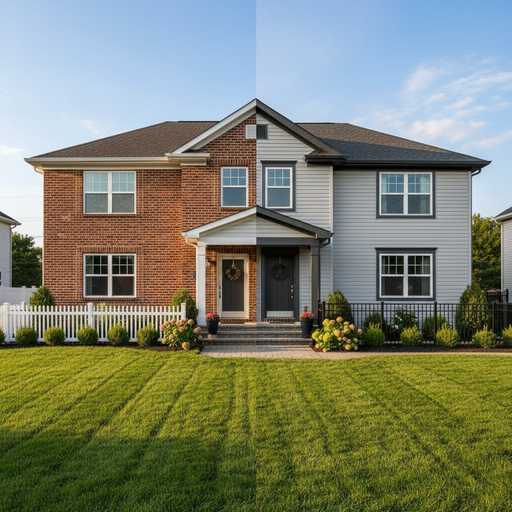
Imagine driving through a quiet suburbaeighborhood in the heart of the Midwest or along the sun-drenched streets of a coastal town. You see two houses side by side. One is wrapped in the timeless, rugged charm of red brick, looking as though it has stood for a century and will stand for another. The other is adorned with sleek, modern siding, boasting a crisp color palette and a clean, contemporary silhouette. Both look beautiful, but as a homeowner or a prospective builder, a critical question begins to form: which one is the better investment?
Choosing between brick and siding is one of the most significant decisions you will make for your home. It isn’t just about aesthetics; it’s a complex calculation involving upfront costs, long-term maintenance, energy efficiency, and eventual resale value. In the United States, where climates range from sub-zero winters to blistering summers, the material you choose acts as the primary shield for your family. Let’s dive deep into the real-world costs and storytelling behind these two iconic American exterior choices.
The Upfront Cost: Setting the Stage
If we look strictly at the initial invoice, siding—particularly vinyl siding—is the undisputed heavyweight champion of affordability. For many first-time homeowners, the lower entry price of siding is what makes homeownership possible. On average, installing vinyl siding in the USA can cost anywhere from $3 to $8 per square foot, including labor and materials. For a standard 2,000-square-foot home, you might be looking at an investment of $6,000 to $16,000.
Brick, on the other hand, is a luxury investment. The cost of materials is higher, but it’s the labor that truly drives the price into the atmosphere. Laying brick is a specialized craft that requires a skilled mason. You aren’t just paying for the clay blocks; you are paying for the hours of meticulous leveling, mortaring, and structural reinforcement. A brick exterior typically ranges from $10 to $20 per square foot. For that same 2,000-square-foot home, the price tag could easily climb to $20,000 or even $40,000.
While the gap seems massive, it’s important to consider what you are getting for that extra “brick tax.” With brick, you are purchasing a structural element; with siding, you are largely purchasing a decorative skin.
Durability: The Story of the Three Little Pigs Revisited
We all know the childhood story of the wolf and the three houses. While modern siding is far more durable than a house of straw or sticks, the moral of the story still holds some truth in the construction world. Brick is virtually indestructible. It is fire-resistant, stands up to high-velocity winds during hurricane season, and is immune to the rot and termite damage that can plague wood-based sidings.
Siding has a different story. Vinyl, while cheap, can crack in extreme cold or melt if a backyard grill is placed too close. Fiber cement siding (often known by the brand name James Hardie) is a much sturdier middle ground, offering better fire resistance and durability than vinyl, but it still requires a specialized installation to prevent moisture from seeping behind the panels. If you live in an area prone to hailstorms, a brick house will emerge unscathed, while a sided house might look like it’s been through a cosmic shooting gallery.
Maintenance: The Hidden Cost of “Cheap”
This is where the financial narrative often flips. A brick home is famously low-maintenance. Aside from the occasional “repointing” (repairing the mortar joints) which usually isn’t necessary for the first 30 to 50 years, brick requires almost zero effort. You don’t have to paint it, you don’t have to seal it, and it doesn’t fade in the sun. It ages gracefully, developing a patina that many homeowners actually find more attractive over time.
Siding, however, is a commitment. Vinyl siding needs regular power washing to prevent mold and mildew growth in humid climates. Wood siding requires staining or painting every few years to prevent rot. Even high-end fiber cement siding needs a fresh coat of paint every 10 to 15 years to keep it looking sharp and to maintain its protective qualities. When you factor in the cost of professional painting or the weekend hours spent scrubbing panels, the “savings” of siding begin to erode over a decade or two.
Energy Efficiency and the Monthly Utility Bill
Beyond the look and the upkeep, there is the question of how much it costs to live inside the house. Brick has a high “thermal mass.” This means it absorbs heat during the day and slowly releases it at night. In many parts of the U.S., this helps stabilize the temperature inside the home, potentially lowering cooling costs in the summer and heating costs in the winter.
Siding by itself offers very little insulation. However, modern siding installations often include a layer of “house wrap” or rigid foam insulation behind the panels. A well-insulated siding system can actually outperform a brick wall in terms of R-value (the measure of thermal resistance). The catch? This added insulation increases your upfront siding cost. In the battle of the bills, brick wins oatural properties, but siding can win if you’re willing to pay for the high-tech undergarments.
Resale Value: The Appraisal Impact
When it’s time to move on, what does the market say? Real estate data consistently shows that brick homes have a higher resale value. There is a psychological sense of permanence and “premium” quality associated with brick. In a competitive market, a brick exterior can be the deciding factor that allows a seller to list their home at a higher price point.
That said, siding offers a versatility that brick caot match. If the current trend is “Modern Farmhouse” with white vertical boards and black trim, a sided house can be updated to match that trend relatively easily. A brick house is, for the most part, stuck with its color forever—unless you choose to paint the brick, a controversial move that many experts warn against because it traps moisture and creates a permanent maintenance task.
Which One Should You Choose?
So, we come back to the driveway of those two houses. Which one is right for you?
- Choose Siding if: You are working with a tighter budget, you love the ability to change your home’s color every decade, or you are building in a modern style that requires sleek lines and varied textures.
- Choose Brick if: You view your home as a multi-generational asset, you want the lowest possible maintenance schedule, and you prefer a classic, stately aesthetic that commands a premium price at resale.
Ultimately, the “cost” of your home’s exterior isn’t just the number on the check you write today. It is the sum of the repairs you don’t have to make, the energy you don’t waste, and the pride you feel when you pull into your driveway. In the USA, both brick and siding have earned their place in our architectural history, and both can make a house a home—it just depends on which story you want your walls to tell.
Conclusion
In the showdown between brick and siding, there is no universal wier, only the right choice for your specific circumstances. Brick offers unparalleled durability and long-term savings, making it the choice for those who value stability and tradition. Siding offers flexibility and lower initial costs, making it the hero for budget-conscious families and fans of modern design. By weighing the immediate expenses against the long-term maintenance and energy needs, you can choose an exterior that protects your investment and provides a beautiful backdrop for your life for years to come.
